Thursday, January 29, 2009
Apple, Microsoft Debut Features at ATIA
The Assistive Technology Industry Association (ATIA)2009 conference in Orlando is off to a great start. I attended sessions on VoiceOver for iTunes, and Apple shipped in 50 or so brand-new Macs to demonstrate speech capabilities for the iTunes library, a new accessibility feature that will be rolled out by summer. A visually impaired attendee, Adam Gaffney, who works for Florida's agency for blind services, whizzed through VoiceOver and pointed out potential goofs. I couldn't hear on the available earbuds so I tried to follow along somewhat haphazardly. But it's still a very cool feature. Microsoft presented the new built-in screen magnifier for Windows 7. A nice add-in for the visually impaired, if not basic. I also attended an awe-inspiring talk by Benetech's Jim Fruchterman, who I met several years ago when he launched Bookshare.org, an audio book service for the blind that's essentially like Napster for books (only he worked in collaboration with publishers, not against them.) Jim and his research partner, Gregg Vanderheiden of the University of Wisconsin's TRACE center for assistive technology research, talked up the invention of a "superbrowser" that will give equal access to content over the Internet to all disabled people, all over the world. More details to come on that initiative, and others, as ATIA continues on Friday.


Monday, January 26, 2009
Patriots' Museum Lets Deaf, Blind Experience Football

The New England Patriots Hall of Fame in Foxborough, Mass., is installing a listening and closed-captioning system that will allow people with disabilities to experience the museum in much the same fashion as visitors who are not disabled. An article in The Boston Globe says the hand-held devices are pocket computers that pick up infrared or FM radio signals beamed from transmitters in the ceiling. The system tracks visitors as they move about, triggering audio descriptions for the blind and closed captioning or enhanced audio for those with hearing problems. One of the more popular exhibits is a re-created huddle that includes life-size statues of players and quarterback Tom Brady calling a play. Visitors can stand in the huddle and hear Brady bark instructions. For a visitor who is deaf, the hand-held device runs closed captioning at the same time Brady is speaking. Visitors who have partial hearing can wear headphones that receive enhanced audio from an FM transmitter. For those who are visually impaired, the device describes the scene in the huddle. The system is one similar to the one used at Disney World, which I recently wrote about for BusinessWeek.com. All in all, not many sports establishments think about disability when designing new stadiums and museums, so this is great to read about. The museum admission is $10 and the devices are free to use.
Friday, January 23, 2009
Wal-Mart Settles Disability Lawsuit

Wal-Mart Stores, Inc. has agreed to settlement a lawsuit claiming that it discriminated against its people with disabilities under Title III of the Americans with Disabilities Act (ADA) and promised to improve access for persons with disabilities at its stores nationwide. The agreement resolves an investigation that was initiated after the U.S. Department of Justice received several complaints alleging that Wal-Mart had refused to make reasonable modifications to its rules, policies, practices, and procedures for customers with disabilities. In particular, several complainants alleged that Wal-Mart denied equal access to its stores for people with disabilities who use service animals; at least five complainants alleged a failure to provide disability-related assistance, two complainants alleged that Wal-Mart denied equal access by failing to make reasonable modifications in order to accept payment by people with disabilities at different stores; and one complainant alleged that a Wal-Mart auto service department denied him equal access to its services because he was deaf and did not have a cellular telephone. The settlement agreement covers all facilities located in the United States where Wal-Mart sells any good or service to members of the public, including all Wal-Mart stores, Supercenters, Sam’s Clubs, and Neighborhood Markets. The agreement, which will be effective for three years, requires Wal-Mart to take several steps to improve access for customers with disabilities, including:
- an undertaking by Wal-Mart not to discriminate in violation of Title III of the ADA and to provide reasonable modifications to individuals with disabilities as required by Title III of the ADA, such as disability-related assistance such as helping customers in locating, lifting, and carrying items;
- the adoption and implementation of an ADA-compliant policy of welcoming persons with disabilities who use service animals into Wal-Mart stores with little or no questioning and without repeated challenges by Wal-Mart employees;
- training for all employees on Wal-Mart’s obligations under Title III of the ADA to make reasonable modifications for individuals with disabilities and Wal-Mart’s new ADA-compliant service animal policy;
- additional training for store management and People Greeters, since employees in these positions have additional responsibilities under Wal-Mart’s new service animal policy;
- the posting of Wal-Mart’s new service animal policy on its website and in employee areas at its stores;
- the establishment of a grievance procedure in which Wal-Mart will receive complaints alleging violations of Title III of the ADA at a toll-free hotline, investigate such complaints, and take appropriate corrective actions to resolve any noncompliance with Title III of the ADA, including relief to complainants where appropriate.
Under the settlement agreement, Wal-Mart will also pay $150,000 into a fund to compensate certain individuals with disabilities who filed administrative complaints with the Department alleging Wal-Mart’s refusal to make reaonable modifications, including the denial of equal access to persons with disabilities who use service animals. Wal-Mart will also pay an additional $100,000 into a fund that will be used by the Civil Rights Division to finance a public service announcement campaign to increase public awareness of the access rights of persons with disabilities who use service animals.
Wednesday, January 21, 2009
Stevie Wonder on High-Tech for the Blind

At the Consumer Electronics Show in January, Vision Free presented awards to 19 companies and organizations for making products that blind people can use. Vision Free is led by blind musician Stevie Wonder and several organizations that promote equality for visually impaired people. Among the awards this year were National Public Radio for their accessible digital radio broadcast services initiative; Apple for adding speech capabilities to its its iPod Nano and iTunes music library; and Audible.com for providing a good web interface and enabling Audible books on several devices for the blind. In an Popular Science magazine interview, Wonder says huge advances in technology have made life easier for people with physical disabilities, but there's still much more work to be done. "I hear manufacturers say, 'Oh, we forgot about that,' or 'Oh, that's interesting.' Well, think! Make your products a convenience for everyone. Be an all-inclusive company," Wonder said. At the top of the Grammy award winner's list of favorites at CES is the new Apple iPod that lets the iTunes music library "talk" to him and also has more accessible controls. On his wish list? A car that he can use to get around, though he realizes this invention could be a long way off.
Tuesday, January 13, 2009
And So It Goes...on American Idol

The setting: Phoenix. The scene: American Idol, season eight, the momentous singing competition that makes or breaks the dreams of young, hopeful talent. Tonight's two-hour premiere was well worth watching to the very end, when 23-year old Scott McIntyre auditioned for the judges. McIntyre has been blind from birth. Sporting a 'Mind the Gap' t-shirt (a nod to London's famous 'tube' system) that he thought Simon Cowell would appreciate, McIntyre won the judges over with his rendition of Billy Joel's And So It Goes. Because of my hearing impairment, I rely on my boyfriend to tell me whether each contestant has a good voice. "Is he good? Can she sing?," I ask during each performance. I had my fingers crossed for McIntyre. "He's pretty good," my boyfriend replied, somewhat tentatively. When the song finished, I sat up straight in my seat. I had seen contestants with disabilities compete on Idol and other programs before, without success. But I knew the judges saw pure talent in McIntyre, who is also a pianist and songwriter. The final outcome: Four 'Yes'-es from the judges, and Paula Abdul told him she especially liked his "softer tones." I started to tear up, thankful that the judges saw McIntyre's talent (in addition to, or instead of, his disability), his sheer determination, and the guts it took for him to audition without his 'security blanket,' -- his piano. The media has called McIntyre's voice "soulful" and "like Coldplay." I personally can't decipher musical styles nor pitch, but I am delighted for him. Idol's producers may have made Americans wait two hours for this beautiful performance, but it was not in vain. Good luck to you, Scott. May others with disabilities (and talent) aspire to go forth as bravely as you have.
12/14 UPDATE: I want to comment on the blogsphere's ridicule of Idol host Ryan Seacrest, who tried to give McIntyre a high-five after the audition. McIntyre, who has said he has tunnel-like vision that allows him to only see "one [piano] key at a time," missed Seacreast's gesture. Now Idol watchers are making fun of Seacreast, which is wrong. The only way to learn how to communicate appropriately with a blind person is to either ask, or try. I bet most of these Idol fans have never tried -- they should take a field trip to Lighthouse International and learn the etiquette. I applaud Ryan for treating McIntyre like everyone else, and for grabbing his hand and continuing through with the motion after realizing his 'mistake.'
In Pursuit of Accessible Travel
Last week I attended the Society for Accessible Travel & Hospitality's (SATH) World Congress in Orlando, where I spoke briefly on assistive technology gadgets for travel. I met many interesting people who are helping the disabled pursue their travel passions, including Craig Grimes of Accessible Nicaragua and Accessible Barcelona who puts tours together for people with disabilities (an especially tough feat in developing nations). I also met the infamous Scott Rains of Tour Watch, a social network for travelers with disabilities. He's a personable guy who puts out the excellent Rolling Rains report. I also talked with Sherri Backstrom of Waypoint Charter, who helps wheelchair users enjoy the experience of yachting via fully accessible ships. SATH held a reception at Universal Studios, where I had the pleasure of being introduced to Cindy Brown, who has a background in ADA compliance and writes for several publications. Her speciality is cultural tourism; she gave a nice presentation on accessible museums, tours and theaters in the U.S. and tips on how to find them, such as by going to the accessibilty solutions page of the Theater Development Fund and the accessibility page of The Metropolitan Museum of Art in New York.
Tuesday, January 6, 2009
Google Phone for the Blind

Google is working on an add-on to its Android mobile phone operating system that would make it much easier for blind people to use. Google researcher T.V Raman, who is blind, is working on a system for a touch screen phone, according to the New York Times. It works by touching any point on the screen, which the phone would then assign to the number five, or the center of the numeric pad. The user could scroll up or down, left or right to finish dialing -- and shake the device to wipe the number and redial. The phone would also work in tandem with existing voice-recognition technology. Mr. Raman is also working on systems that include GPS to allow blind people to navigate using spoken directions from the phone. While GPS is prevalent in cars today, there's little innovation by way of pedestrian travel, which Mr. Raman and his colleagues hope to change.
Monday, January 5, 2009
NYT Features Two Disability Articles

Over the weekend I read two really interesting articles in the New York Times on disability topics. One was in a special report called Education Life, about a group of MIT students who created a video game for the blind. I had read about this game, called AudiOdyssey, when I was doing research a few weeks ago for a recent article. Most video games for the blind are designed just for the blind; AudiOdyssey is unique because it's the first game that allows blind and seeing users to compete against each other equally, without giving the seeing person an advantage. Using music as its central theme, the game follows a disc jockey whose objective is to get people in his nightclub onto the dance floor by pumping out great music that players mimic by matching his beat. AudiOdyssey can be downloaded here and played on a keyboard or with a Wii remote.
The other story I read was in the New York Times Sunday Magazine, about the coming-of-age of service animals for the disabled. Everyone knows about seeing eye dogs for the blind, but foals (small horses), for example, are also being trained to guide blind people and are considered less aggressive. The article takes an interesting turn when the writer introduces several people with disabilities who own exotic pets, such as a man with bipolar disorder who uses a parrot to calm him down when he has an episode. The article suggests that some animal owners with disabilities are going too far in trying to get special privileges for their pets. I don't believe that the ADA should be changed to allow all exotic animals like parrots and monkeys into restaurants and stores -- it's just too risky for the general population. But I do believe that there's room to thoroughly train and certify certain species so that they can continue to provide benefits to the disabled.
1/7/09 update: The author of the NYT magazine story, Rebecca Skloot, has issued an update on the Department of Justice's consideration of allowing animals other than dogs to be deemed 'service animals.' On her blog, Skloot writes that she received a leaked version of the DOJ ruling; it will ban all animals except dogs, though the regulation will include a special provision for miniature horses.
Saturday, December 27, 2008
Assistive Tech for Fun and Play

I just wrote this article for Businessweek.com, For the Disabled, More Power for Play. I thought it was about time that someone wrote about assistive technology for leisure and fun, rather than just for more functional purposes like the workplace. Some readers have commented about the high price of some of these technologies. Fair point, though I'm hoping that as more people purchase them the price will drop, and that my article will bring to light the $200 billion disability market -- giving companies more incentive to create and market their products for people with disabilities.
Monday, December 22, 2008
Audio Aquarium Lets Blind See Fish

More cool inventions coming out of Georgia Tech, this time from the school's Center for Music Technology. An "audio aquarium" is in the works that will help blind people experience marine life. It works by pairing fish and their movements with music via visual-recognition software that creates a symphony of sounds. To be sure, it's not random music emanating from the fish tanks. Specialized software links each fish movement to different instruments that change in pitch and tempo as the fish patrol the tank. Fish that move toward the surface have a higher pitch. The faster they move, the faster the tempo. Georgia Tech scientists hope to install their invention in aquariums and zoos across the nation, including the Georgia Aquarium in Atlanta, the world's largest. The technology can be extended to other platforms, and the team has used it to track ants and other animals. In a Boston.com article, associate Georgia Tech professor Bruce Walker summed up the efforts: "Many of the things we do help [people with disabilities] solve basic problems -- shopping, working, brushing their teeth ... There are very few assistive technologies that help them do the fun stuff." This new soundstage has tremendous potential (as long as it doesn't replicate that chilling theme song from Jaws)!
Thursday, December 18, 2008
New Banking Tech for the Deaf

In Texas, new technology will make banking easier for people who are deaf. Video relay interpreting (VRI) in American Sign Language (ASL) is now available at Frost Bank at 16 locations in Austin, San Antonio and the Rio Grande Valley. The ASL translation service is conducted via videoconference with a personal banker in a private conference room. Deaf Link provides the service and interpreters, and Frost plans to expand to other banking locations throughout the state. VRI is an important move for helping deaf banking customers make significant financial decisions in their native language, without having to lip-read or use written notes. While the Americans with Disabilities Act doesn't require banks to provide sign-language interpreters, they usually will if asked -- but it can take days for one to become available and costs about $100 an hour. (The bank pays.) VRI is a much better solution. It's free to use, and the service is available 24/7. However, that doesn't mean bankers' hours will improve anytime soon. Watch a Fox News clip about the new service.
USC Designs Bar Code Reader

Wal-Mart and Target take note: Science students at the University of Southern California have designed Bar Code Reader, a program to help the visually impaired read information on grocery items by pointing their cellphones at supermarket shelves to hear descriptions of products and prices. That's just one of many products designed during ProjectPossibility, a two-day competition aimed at developing computer programs that help disabled people expand their capabilities. Another futuristic program, which could also help the physically disabled become better online shoppers, is Mind Control, which allows the physically disabled to guide a computer mouse by neural impulses. Yes, you heard it right. Using using brain waves and eye movements to control computers is already at the cutting-edge of bionic research. Earlier this year, researchers at Duke University announced that they had proved monkeys can use their brainpower to control the walking patterns of robots, a major step toward helping victims of paralysis walk again. Mind you, the USC team completed their projects in just two days. According to the New York Times, James Han, founder of ProsForPros, an Internet hosting and consulting firm for small businesses, who was the mentor of the Mind Control team, says: “We were able to leverage open-source codes for mouse control and link to the neural actuator in the first 12 hours,” Mr. Han said. “In the second 12, we created the user interface.” Imagine what these guys can do in a year or two.
Tuesday, December 16, 2008
Disability (Finally) Parodied on SNL

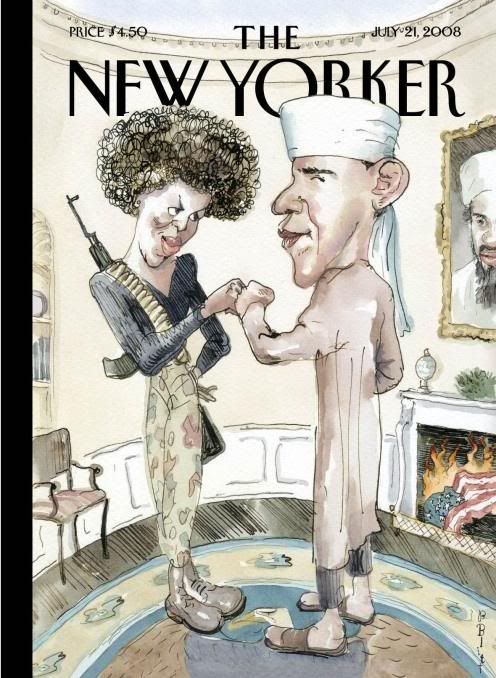
On Saturday night, SNL portrayed New York Gov. David Paterson in a four-minute "Weekend Update" segment as confused and disoriented -- often looking in the wrong direction and mistakenly walking in front of the camera when it was not his turn to speak. The skit includes Gov. Paterson saying, "Come on, I'm a blind man who loves cocaine who was suddenly appointed governor of New York. My life is an actual plot from a Richard Pryor movie." After watching the skit, Gov. Paterson said it went too far, saying such "third-grade humor" only adds to negative stereotypes. But I'm starting so see a trend here: Disability humor is now up for grabs along with the more traditional racial and ethnic jokes. There was the New Yorker cover depicting Barack Obama as an Islamic, and the movie Tropic Thunder that parodied actors who tried to "act" disabled or black, giving us the infamous "R-word" that led to disability advocates boycotting the movie. Disability is starting to become a mainstream minority, and that's actually a good thing. Because once the disabled are recognized as a minority group that collectively brings intelligence, talent and perspective to the table -- the more likely we'll see disability employment rates go up, more stereotypes broken, more national coverage of disabilities in the media, and a larger understanding among abled-bodied people of what it's really like to be legally blind. Yes, it includes not knowing which direction to look in, and not being able to judge body language during a conversation. If a blind person is talking to someone who walks away without saying goodbye, he may stand there waiting, which makes him look foolish -- not because he's too dumb to realize that there's nobody there anymore, but because he can't see, and the seeing person didn't know how to properly engage in tactics that are necessary for blind people to succeed. If anything, that SNL skit should be replayed in Corporate America to give more people an understanding of what it's like to be blind, and how the abled-bodied can help -- rather than hinder -- the professional accomplishments of people like Gov. Paterson.
Sunday, December 14, 2008
Fuji the Bionic Dolphin

I'm going to tell you a story about the amazing ability of assistive technology to transform lives. This story is about Fuji, a 34-year old bottlenose dolphin at the Okinawa Churaumi Aquarium in Japan, the world's second largest aquarium, whose name means "beautiful ocean" in okinawan dialect. Fuji has lived at Churaumi for 30 years, and she has three children who were born and raised there. One day the aquarium's veterinarian noticed that Fuji's tail was turning white. He discovered that Fuji had an infection and circulatory problem that was causing gangrene. The doctors were able to save Fuji's life, but they had to remove her tail fin. This dramatically impaired Fuji's ability to swim and be social, and also she started to gain weight. While medical science saved her, Fuji's quality of life was greatly reduced by the loss of her tail. Looking for a solution, the aquarium's manager contacted Bridgestone, Japan's largest maker of tires. Drawing on their expertise in rubber, Bridgestone designed an artificial tail for Fuji made of silicone, a material that is highly compatible with living tissue. The tail is mounted with an attachment made of carbon-fiber reinforced plastic. Fuji spent several months in rehab with her new tail, and like most patients who try assistive technology for the first time, she didn't respond well to the rubber fin. At one point she was treating it like a toy; she kicked too hard and it fell apart. But soon Fuji realized that the tail was giving her a better life, allowing her to swim, get fit, play with her children, and remain an integral part of the aquarium's outdoor dolphin show, where today, she can jump entirely out of the water. For Fuji -- a truly "bionic dolphin" -- quality of life has been restored. Hopefully she'll have many more years of happiness in her subterranean world where, with her rubber fin she'll continue to be treated as equal by the other dolphins --and the true power of her tail will have been realized.
Thursday, December 11, 2008
Are Disabilities Ready for Primetime?

Wednesday's New York Times Well column, written by Tara Parker-Pope, talks about celebrities and mental health. It's a timely topic, as Ms. Pope points out. Lately, celebrities from Britney Spears to Dennis Quaid have spoken out on behalf of medical conditions in an effort to raise awareness, which in turn, also makes good tabloid copy. As many of you might have picked up on, there's more prevalance of disabilities on primetime TV, particularly non-verbal learning disabilities. Grey's Anatomy (perhaps in an effort to boost lagging ratings) has just introduced a surgeon, Virginia Dixon, who has Asperger's Syndrome -- a form of high-functioning autism -- and a popular resident, Izzie Stevens, may have a brain tumor. Boston Legal's Denny Crane is in the early stages of Alzheimer's. Several other primetime characters are also suspect of falling somewhere along the autism spectrum, including Dr. Temperance Brennan of Bones, two children of Vic Mackey on The Shield, Jerry Espenson on Boston Legal, Dr. Greg House on House, M.D., and many more. Less prevalent, however, are physical disabilities such as blindness and deafness. When these characters do appear, they're generally stuck with disability-specific plot lines, which gives them little room to expand as characters. How fascinating would it be to watch a blind bartender mix exotic cocktails and chat up pretty women, or watch a deaf undercover specialist (remember Sue Thomas: F.B. Eye?) fight terrorists? Until then, celebrities and primetime TV can do much to elevate the disability discussion. We can look forward to more in 2009, so long as there's potential for more headlines and higher ratings.
Subscribe to:
Posts (Atom)

 Posts
Posts